
Our history
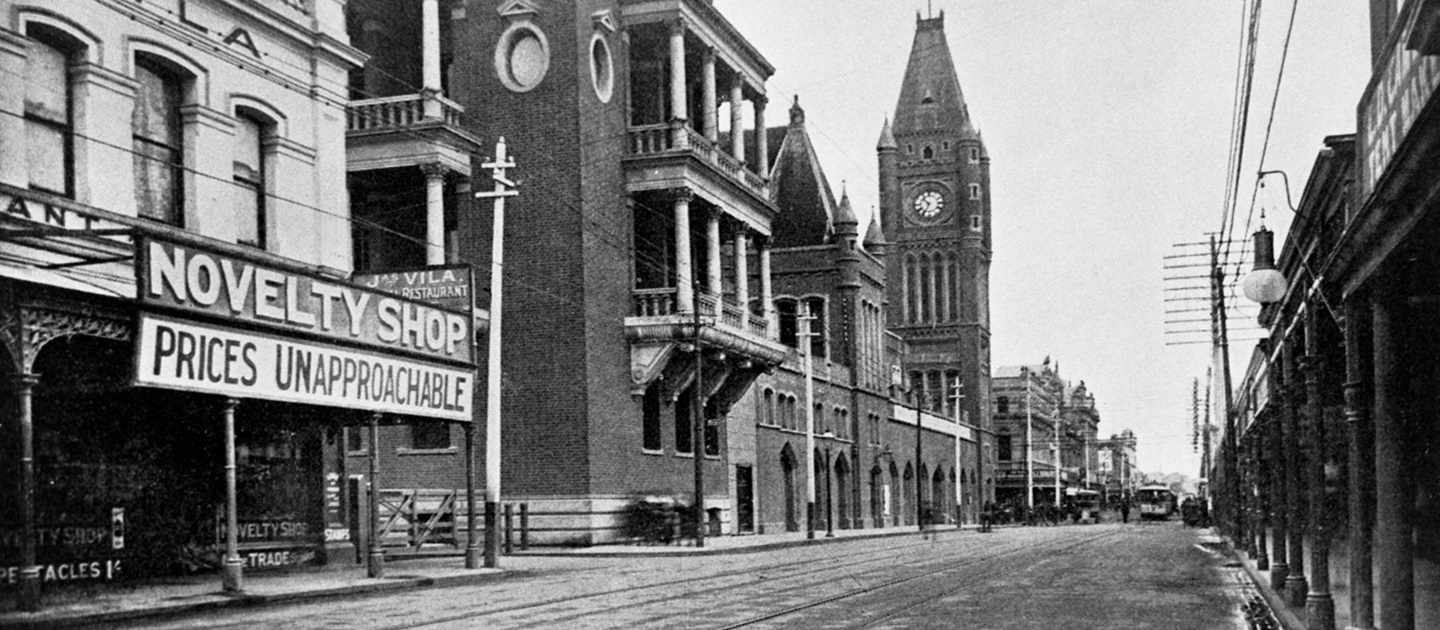
Our history
Perth’s history is simply fascinating; from the convicts and colonies to the boom and bust economy and the reasons why the city sits on the exact site it does, you’ll discover a host of things you didn’t know here…
Whatever your history obsession; whether it’s our indigenous culture, the architecture styles of our buildings or even the men and women behind the businesses and communities that have made Perth the prosperous city it is today, you’ll be sure to find out something great about our state.
See also
-
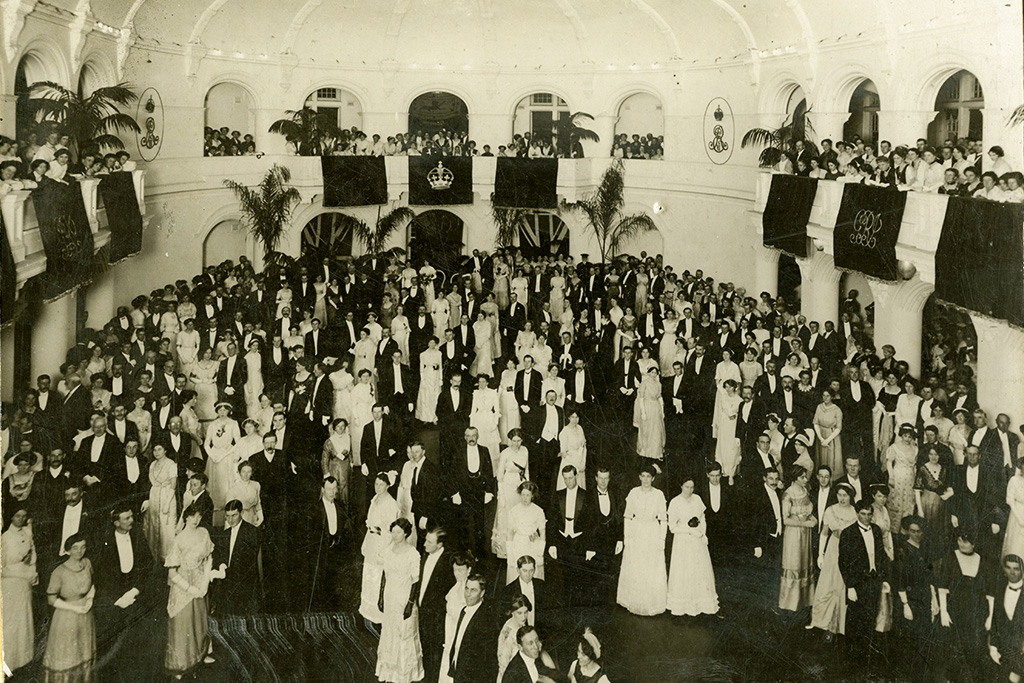 Mayoral Ball, Government House Ballroom, 1910.
 -
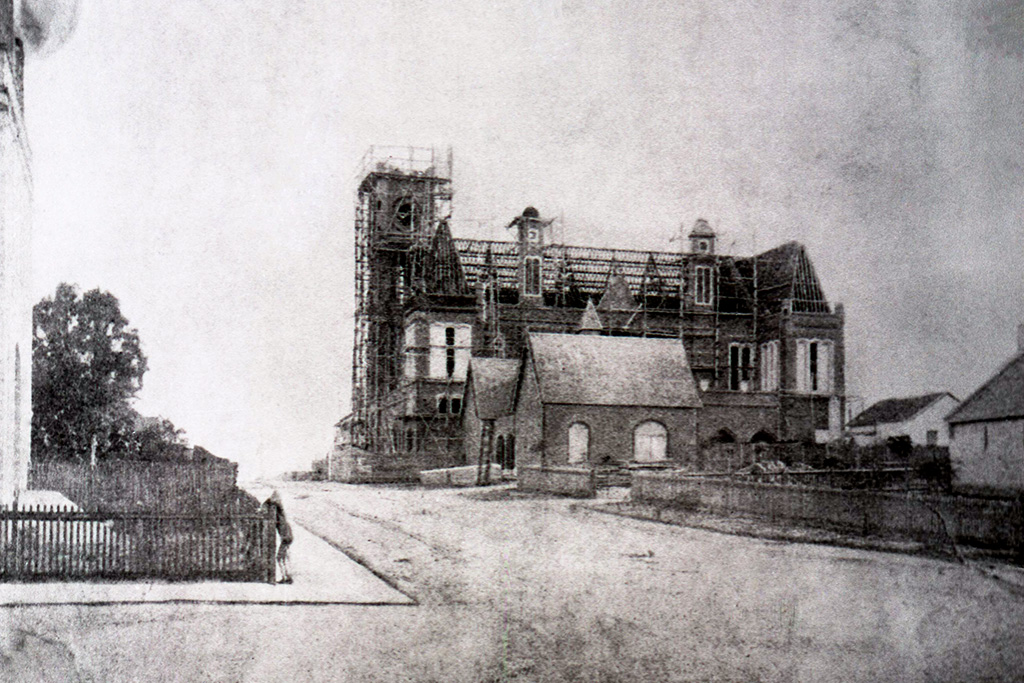 Perth Town Hall under construction, 1868.
 -
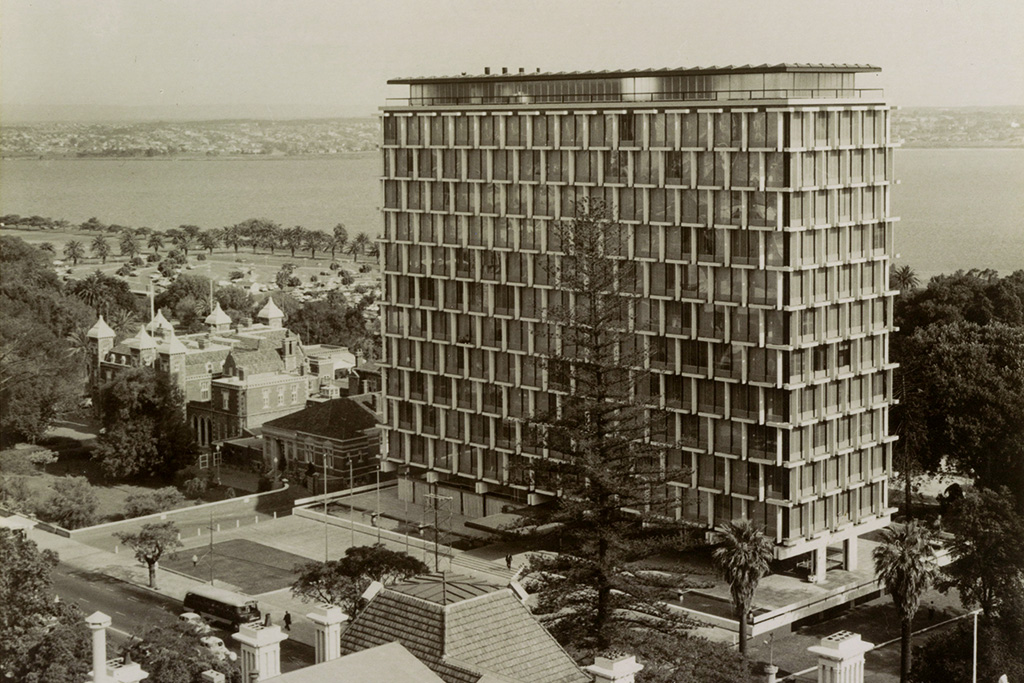 Council House completed, 1963.
Aboriginal history
The City of Perth (Boorloo) sits on the Land (Country / boodja) of the Whadjuk people of the Nyoongar nation. The Whadjuk people are the Traditional Owners of the land and waters where the city is located, forming part of the larger Nyoongar Nation which extends across the South West of Western Australia.
The Swan River (Derbarl Yerrigan) is a sacred place for Whadjuk Nyoongar people and holds many stories of the Waugal, a water-serpent understood to be responsible for the creation and maintenance of the river and most of the water features around Perth. The Whadjuk people moved with the seasons, travelling inland in winter, then returning in late spring to capture game such as wallabies, kangaroos and possums. A main camp site was at what is now known as Kings Park (Kaarta Koomba or Kaarta Gar-up) and the mud flats at Matagarup (which later became Heirisson Island) were a productive fishing spot.
Prior to the arrival of Captain James Stirling and the establishment of the Swan River Colony in 1829, interaction between Aboriginal communities and visitors including Dutch and French explorers was documented.
In 2009 the South West Aboriginal Land and Sea Council (SWALSC) and the Western Australian (WA) Government signed a Heads of Agreement (HOA), officially starting negotiations to settle all native title claims in the South West of Western Australia. In 2022 six Regional Corporations including Whadjuk Aboriginal Corporation were appointed to represent their communities under the South West Native Title Settlement.
As the recognised representatives of Traditional Owners and with responsibilities for cultural lands across their regions, Regional Corporations are a key contact point for stakeholders including government, the not for profit and private sectors.
Further information on Regional Corporations can be found here.
European settlement
The city of Perth has its origins in 1829 when the Swan River Colony was established by the British Government. The area is also home to the Aboriginal Noongar people who have lived in the south-west region of Western Australia for more than 35,000 years. In the city precinct itself, the traditional owners are known as Whadjuk Noongar people.The first colonial Governor, Capt James Stirling, named the new settlement after the Scottish birthplace and parliamentary constituency of the then British Secretary of State for the Colonies, Sir George Murray. When surveying the area previously, Captain Stirling was said to have been stunned by the beauty of the Swan River and the fertile land around it.
Since water transport was vital to communications in the new colony before roads were built, the meanderings of the Swan River determined the site of the first towns. Governor Stirling decided that the site for the colony’s capital would be sited on the river 18km from the sea port of Fremantle. On 12 August 1829 Mrs Helen Dance, wife of the commander of HMS Sulphur, drove an axe into a tree (near the current Perth Town Hall) to mark the colony’s foundation.
The city site was mid-way between the sea and the farming areas of the Upper Swan. However, the early years were difficult financially for the colony and in 1850 it was decided that convict labour would be beneficial in that regard. Between 1850 and 1868 almost 10,000 convicts were transported from Britain. Due to the influx of convicts, many public works were completed during the period from 1856-79, notably the Perth Town Hall. It was not until 1856 that Perth officially gained ‘city’ status when it was declared a Bishop’s See by Queen Victoria.
The first meeting of the Perth City Council was held on 10 December 1858. Rich gold discoveries in the Kalgoorlie region in the early 1890s brought a new era of prosperity for the city and many impressive buildings, some of which still grace the streets to this day. The city also experienced significant population growth. Representative government evolved in Western Australia in the second half of the 19th Century and in 1901 Western Australia federated with the other Australian States to form the Commonwealth of Australia. Perth experienced another mining boom in the 1960s and the wealth it generated could be evidenced by the city’s changing CBD skyline.
Perth became widely known as the City of Lights when U.S. astronaut John Glenn told the world he had seen the city’s lights during his historic orbit around the Earth in February 1962. There was also international attention on Perth later that year when the British Empire and Commonwealth Games were held in the city. Commonwealth leaders from around the world converged on Perth when it was the venue for the successful Commonwealth Heads of Government Meeting (CHOGM) in 28-30 October 2011.