
Aboriginal Culture
Aboriginal Culture
Warning: Aboriginal and Torres Strait Islander people are respectfully advised that this site and linked production contains images, video and audio of people who have passed away. Their contribution and legacy is valued and continues to inform the City’s initiatives.
|
The City of Perth kaditj kalyakool moondang-ak kaaradj midi boodjar-ak ngala nyininy, Wadjuk Noongar yoongar wer bandany Aboriginal yoongar yooarme boodjar-ool. Ngalang kaditj Birdiya koora wer yeyi moondang-ak kaaradjiny. |
The City of Perth acknowledges the Traditional Custodians of the Land we are situated on, the Whadjuk people of the Nyoongar nation and Aboriginal people from other Lands. We celebrate the continuing traditions, living culture, and the spiritual connection to Boorloo (Perth) and the Derbarl Yerrigan (Swan River). We offer our respects to Elders past and present. |
The City of Perth (Boorloo) sits on the Land (Country / boodja) of the Whadjuk people of the Nyoongar nation. The Whadjuk people are the Traditional Owners of the land and waters where the city is located, forming part of the larger Nyoongar Nation which extends across the South West of Western Australia.
The Swan River (Derbarl Yerrigan) is a sacred place for Whadjuk Nyoongar people and holds many stories of the Waugal, a water-serpent understood to be responsible for the creation and maintenance of the river and most of the water features around Perth. The Whadjuk people moved with the seasons, travelling inland in winter, then returning in late spring to capture game such as wallabies, kangaroos and possums. A main camp site was at what is now known as Kings Park (Kaarta Koomba or Kaarta Gar-up) and the mud flats at Matagarup (which later became Heirisson Island) were a productive fishing spot.
The geographical features and natural environment that is fundamental to Whadjuk Nyoongar culture and sustenance, has, and continues to be substantially transformed by development of the City of Perth. Core to our journey towards reconciliation, the City is committed to working closely with the Aboriginal community including Whadjuk Aboriginal Corporation (as the Regional Corporation and recognised representatives of the Traditional Owners) to build understanding, respect, relationships and opportunities.
-
Registered Aboriginal Heritage Sites
Aboriginal heritage holds significant value to Aboriginal people for their social, spiritual, historical, scientific, or aesthetic importance within Aboriginal traditions.
There are many places throughout the City of Perth that are of cultural and spiritual significance for the Whadjuk Nyoongar people. Places linking the past to the present of where Whadjuk Nyoongar people met, camped, hunted and performed ceremonies.
The sites across the City that are registered or lodged under the Aboriginal Heritage Act 1972 are listed below:
Site Location Place Type Type Site3408 LocationEast Perth: Bennett House SignificanceCamp; Other ACH Lodged Site Site3502 LocationKings Park Scarred Tree SignificanceModified Tree ACH Registered Site Site3536 LocationSwan River SignificanceCreation / Dreaming Narrative ACH Registered Site Site3589 LocationHeirisson Island SignificanceCamp; Creation / Dreaming Narrative; Hunting Place; Meeting Place; Plant Resource ACH Registered Site Site3593 LocationGudinup SignificanceRitual / Ceremonial ACH Registered Site Site3694 LocationClaisebrook Camp SignificanceCamp, Water Source ACH Registered Site Site3703 LocationSpring Street SignificanceCamp, Water Source ACH Registered Site Site3704 LocationKings Park Waugal SignificanceRitual / Ceremonial; Creation / Dreaming Narrative; Plant Resource; Water Source ACH Registered Site Site3754 LocationMt Eliza Waugal SignificanceCreation / Dreaming Narrative ACH Registered Site Site3761 LocationKings Park SignificanceRitual / Ceremonial; Hunting Place ACH Registered Site Site3767 LocationEast Perth Power Station SignificanceCamp, Meeting Place; Other ACH Registered Site Site3787 LocationMounts Bay Road SignificanceCamp; Creation / Dreaming Narrative; Water Source ACH Registered Site Site3789 LocationPerth Town Hall SignificanceCamp ACH Registered Site Site3791 LocationMatilda Bay SignificanceCamp; Creation / Dreaming Narrative; Water Source ACH Registered Site Site3798 LocationGovernment House SignificanceBurial; Camp; Water Source ACH Registered Site Site3799 LocationVictoria Square SignificanceBurial ACH Registered Site Site19837 LocationBoojemalup SignificanceRitual / Ceremonial; Creation / Dreaming Narrative; Other ACH Lodged Site Site19863 LocationKings Park Women's Site SignificanceCreation / Dreaming Narrative; Landscape / Seascape Feature ACH Lodged Site Site21621 LocationKilang Minangaldjkba SignificanceWater Source ACH Registered Site Site29278 LocationMidgegooroo’s Execution and Burial SignificanceRitual / Ceremonial; Creation / Dreaming Narrative; Other ACH Registered Site Site37452 LocationWellington Square, the Old Recreation Reserve, Bunjie Park SignificanceHistorical; Traditional Structure; Meeting Place; Rock Shelter ACH Registered Site Find more information about Aboriginal Heritage Sites across Western Australia.
-
Gnarla Boodja Mili Mili
Gnarla Boodja Mili Mili is an initiative acknowledging the names of Noongar places throughout the Perth CBD area. It is designed to be a living and interactive document that can be updated and added to with cultural knowledge overtime.
The map features just some of the many place names that have been passed down from one generation to the next. It identifies sites such as popular camping and hunting grounds, natural landmarks and sacred places traditionally known to Nyoongar people as they moved amongst the lakes, coastal plain and hills of the Perth region, following the six Nyoongar seasons.
-
Walking Trails
Karla Yarning: Stories Of The Home Fires
The Karla Yarning Aboriginal heritage maps allow people to discover the connection Aboriginal people have with the city. The maps take people on a journey to discover and learn the importance Aboriginal heritage holds in the history of our city.
The first map, This City is Whadjuk Country, explores Whadjuk Noongar history before the arrival of white settlers in 1829. On this walk, you will explore areas of importance before white settlement and get a feel for the way Whadjuk people lived, traded, hunted, harvested and conducted ceremonies.The second Karla Yarning map, Fighting for Families, Country, Rights and Recognition, explores Aboriginal history in Perth after 1829. On this walk, you’ll learn about important events and developments including the resistance of Whadjuk leaders Midgegooroo and his son Yagan in the 1830s, the Prohibited Area zone in place between 1927-1954, Aboriginal protest rallies held in the 1930s and 1940s and the establishment of important Aboriginal organisations.
The walks take approximately 1.5 hours each.
The maps were initiated, researched and written by Professor Len Collard of UWA and Dr Tod Jones of Curtin University with input and advice from Cultural Advisors. The City would also like to acknowledge the project partners: Lotterywest, The Department of Planning Lands and Heritage and Curtin University. -
Fanny Balbuk Yooreel
In September 2016, the City partnered with the National Trust of Western Australia to deliver a project honouring the life of Whadjuk woman Fanny Balbuk Yooreel.
Balbuk was passionate about her country and ‘raged and stormed’ through her homelands as colonial Perth developed. Her story highlights the intersection of colonisation and the local Aboriginal people in 19th century Perth and how this manifested in the social, political and natural landscape. Throughout April and May 2017, this collaborative project delivered a suite of publicly accessible activations for the 2017 National Trust Heritage Festival, including publication of a walking trail brochure.
Through following the walking trail brochure, participants can walk the path of Fanny Balbuk Yooreel through the Perth landscape and connect to this Perth city in new ways. Guided by Whadjuk Elder women and their extended families, the map provides an experience informed by newly compiled research to mark the 110th anniversary of the death of arguably Perth’s most important and uncelebrated Whadjuk woman.
The information in this map was compiled through the Department of Aboriginal Affairs, ARC Centre of Excellence for the History of Emotions and the National Trust of Western Australia in partnership with the City of Perth.
-
Aboriginal Culture through Public Art
The City of Perth commissions Public Art for a variety of public spaces including streetscapes, parks and laneways, recognising that the successful integration of site-specific art enhances the enjoyment of the city experience.
The City features many artworks which celebrate and acknowledge Aboriginal culture, storytelling and traditions with those listed below being owned or managed by City of Perth.
The City’s Art City Walking Trail features two Aboriginal artworks; First Contact (2015) by Laurel Nannup and Koorden (2015) by Rod Garlett, Fred Chaney and Richie Kuhaupt.
For further information on any of the City’s works created by Aboriginal Artists please email our City of Perth Cultural Collections Team: [email protected]
See also
Download
- This City is Whadjuk Country Walking Trail6.8 MB | PDF Document
- Fighting for Families, Country, Rights and Recognition Walking Trail7.37 MB | PDF Document
Artwork credit |
|
Description of artwork |
|
Location |
|
GPS location |
||
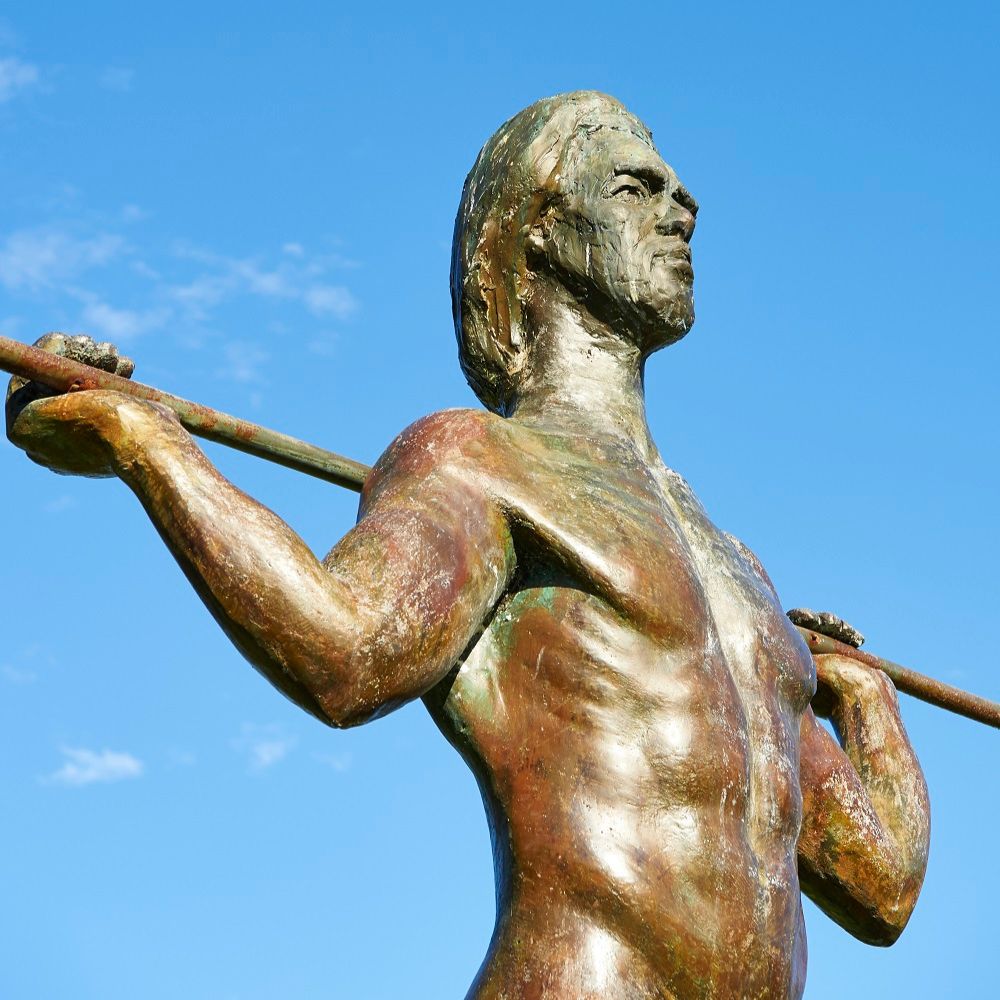 |
Yagan: Robert Hitchcock (1984); City of Perth Cultural Collections. Image courtesy of Frances Andrijich Photography for Perth Public Art Foundation. | Yagan was born circa 1795 and died in July 1833. He was a Whadjuk Noongar man and a resistance fighter during the early years of the Swan River Colony. In the conflict that ensued, Yagan was both feared and admired by Europeans as a freedom fighter defending his land. Today, Yagan is an iconic figure in the fight for Noongar rights and recognition. | Heirisson Island, western end, south of Causeway | -31.967940, 115.876628 | ||||
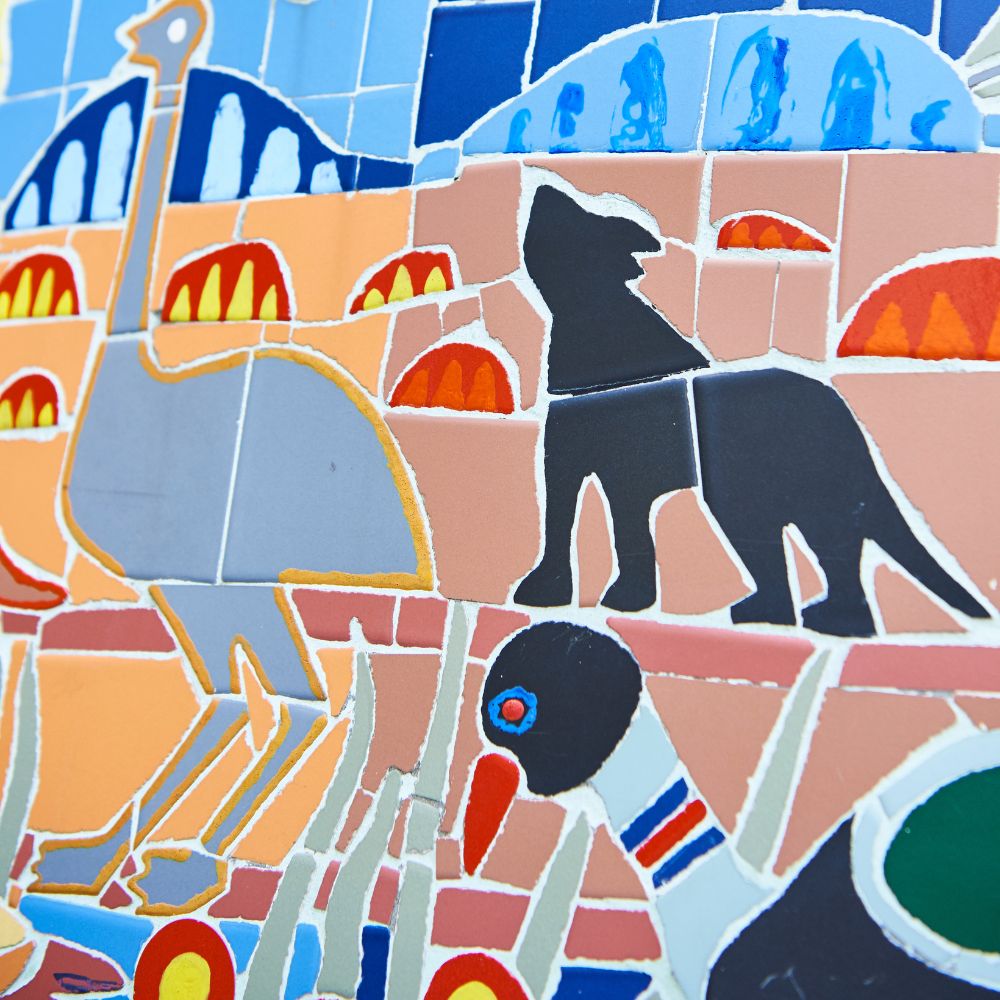 |
Untitled (detail): Toogaar Morrison and John Burgess, (1994); City of Perth Cultural Collections. Image courtesy of Frances Andrijich Photography for Perth Public Art Foundation. | Constructed from a variety of multicoloured tiles, this artwork depicts natural Australian landscapes, flora and fauna. | Citiplace complex, eastern access way, curved wall balustrade | -31.957835, 115.861476 | ||||
 |
Two Fighting Snakes by Matthew Gill Tjupurulla (1994); City of Perth Cultural Collections. Image courtesy of Frances Andrijich Photography for Perth Public Art Foundation. | This large mosaic artwork depicts two snakes fighting over two Tjupurulla men at the homeland of the artist’s father near Lake Mackay in WA’s Northwest. The original design was translated from a dot painting created by the Balgo Hills artist in 1988. The painting is part of the City of Perth Art Collection. | Southwest corner, near Murray Street Mall | -31.952715, 115.859080 | ||||
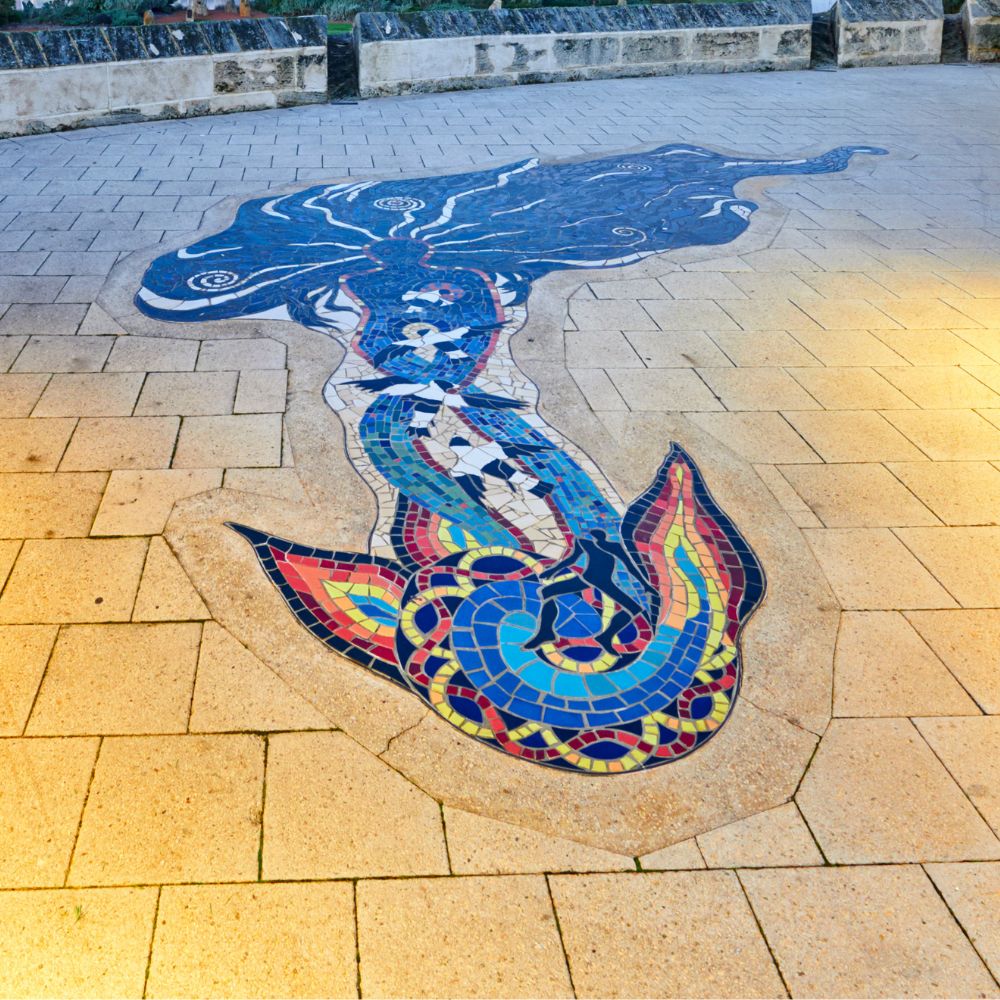 |
Charnock Woman by Miv Egan, Jenny Dawson and Sandra Hill (1996); City of Perth Cultural Collections. Image courtesy of Frances Andrijich Photography for Perth Public Art Foundation. | The East Perth foreshore was a meeting and camping place for the Noongar people. The Charnock Woman ceramic mosaic tells the Noongar Dreaming Story of a giant evil spirit woman, known as the Charnock woman, who stole children from the community. | Eastern Observatory, Victoria Gardens, East Perth | -31.952273, 115.881474 | ||||
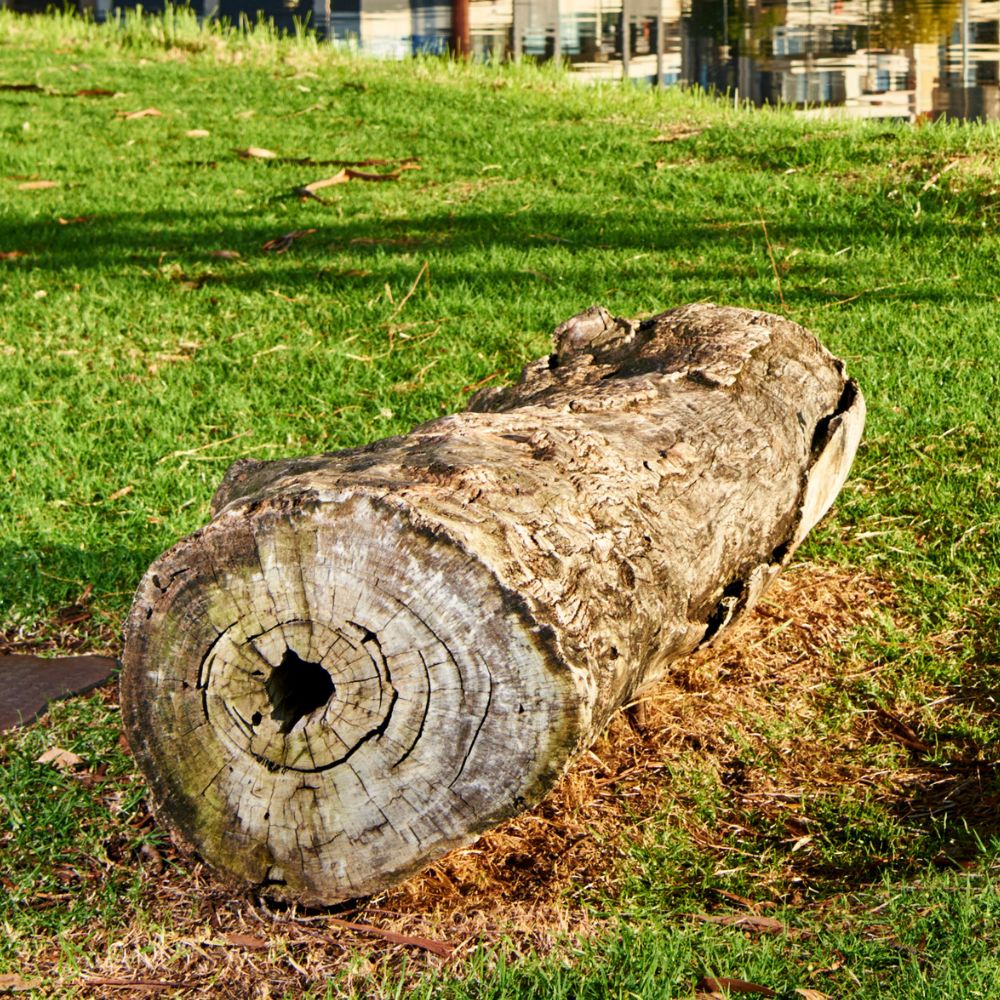 |
Yoondoorup Boorna: Log and Saddle (detail) by Alma Toomath (1996); City of Perth Cultural Collections. Image courtesy of Frances Andrijich Photography for Perth Public Art Foundation. | This old river gum, removed as part of the redevelopment of the East Perth area, was treated and returned to the site at the request of the Noongar people. Its burnt and split trunk was used as a hiding place for goods and messages by those who once camped here. In 2014 the tree saddle was destroyed by fire leaving only the log and plaque. | Royal St, East Perth | -31.951956, 115.881951 | ||||
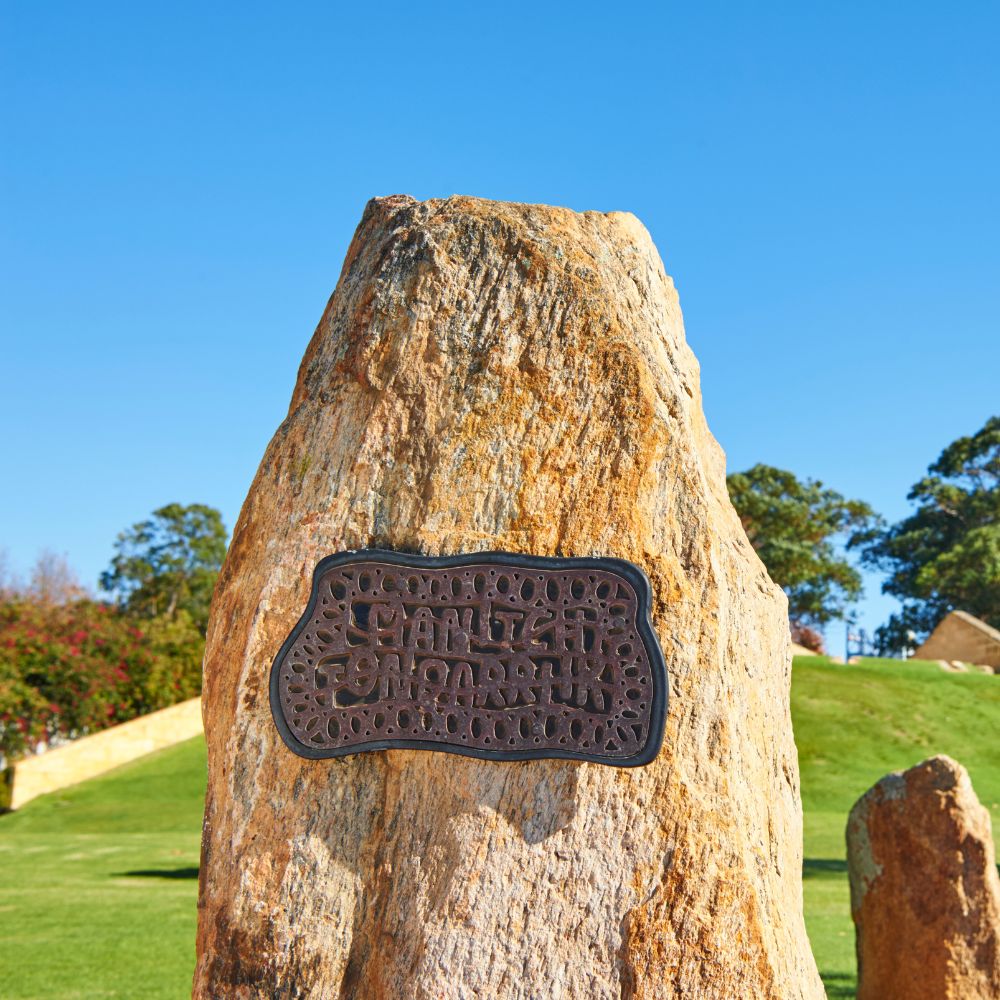 |
Illa Kuri Sacred Dreaming Path: Toogaar Morrison (1996); City of Perth Cultural Collections. Image courtesy of Frances Andrijich Photography for Perth Public Art Foundation. | The Illa Kuri public artwork represents the winding pathway that stretched across the landscape before the city was built. The path led from one freshwater lake to another, represented by the twelve granite rocks that stand as silent sentries with the names of the lakes and totems as guides. | Swan River foreshore, north eastern corner of Victoria Gardens, East Perth | -31.952024, 115.881772 | ||||
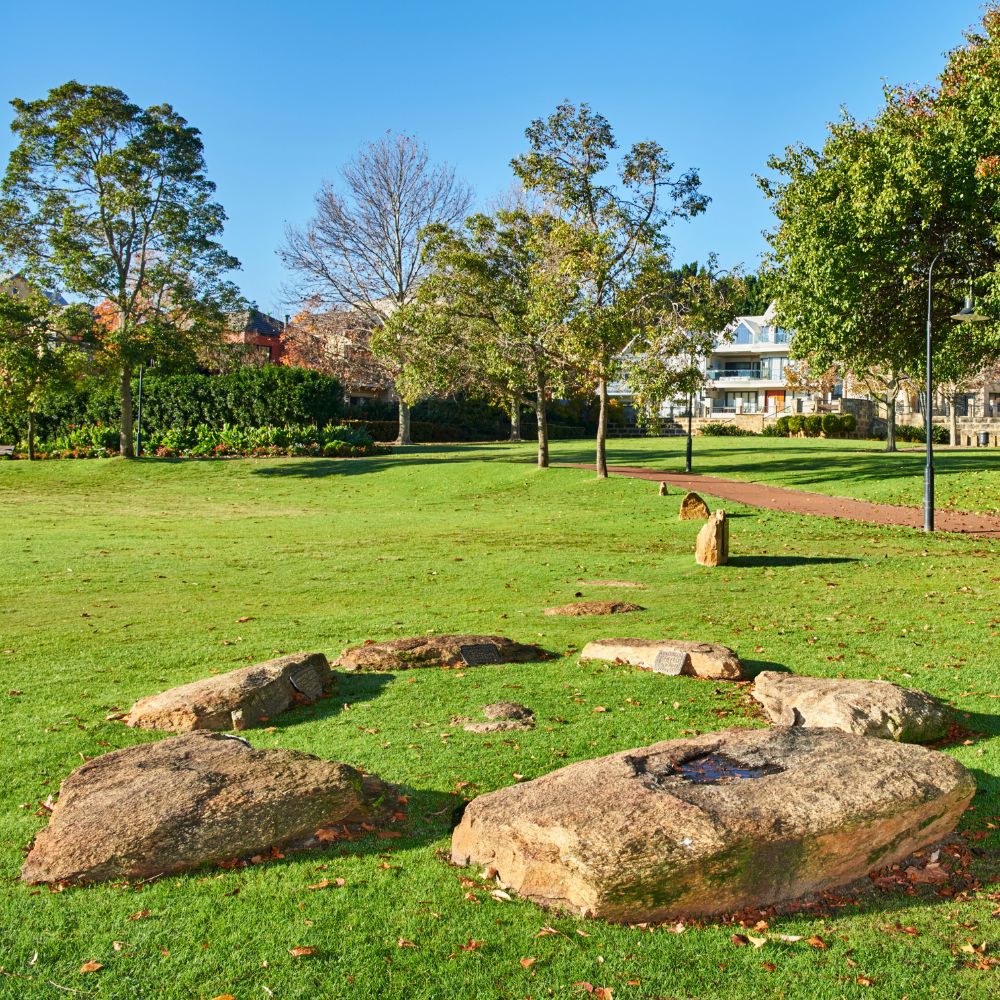 |
Stone Circle: Toogaar Morrison (1996); City of Perth Cultural Collections. Image courtesy of Frances Andrijich Photography for Perth Public Art Foundation. | This artwork commemorates the six Aboriginal communities established along the Derbarl Yerrigan (Swan River) when Europeans arrived. Each stone is associated with a plaque on which a name has been added. | Western end of Victoria Gardens, East Perth | -31.952625, 115.880691 | ||||
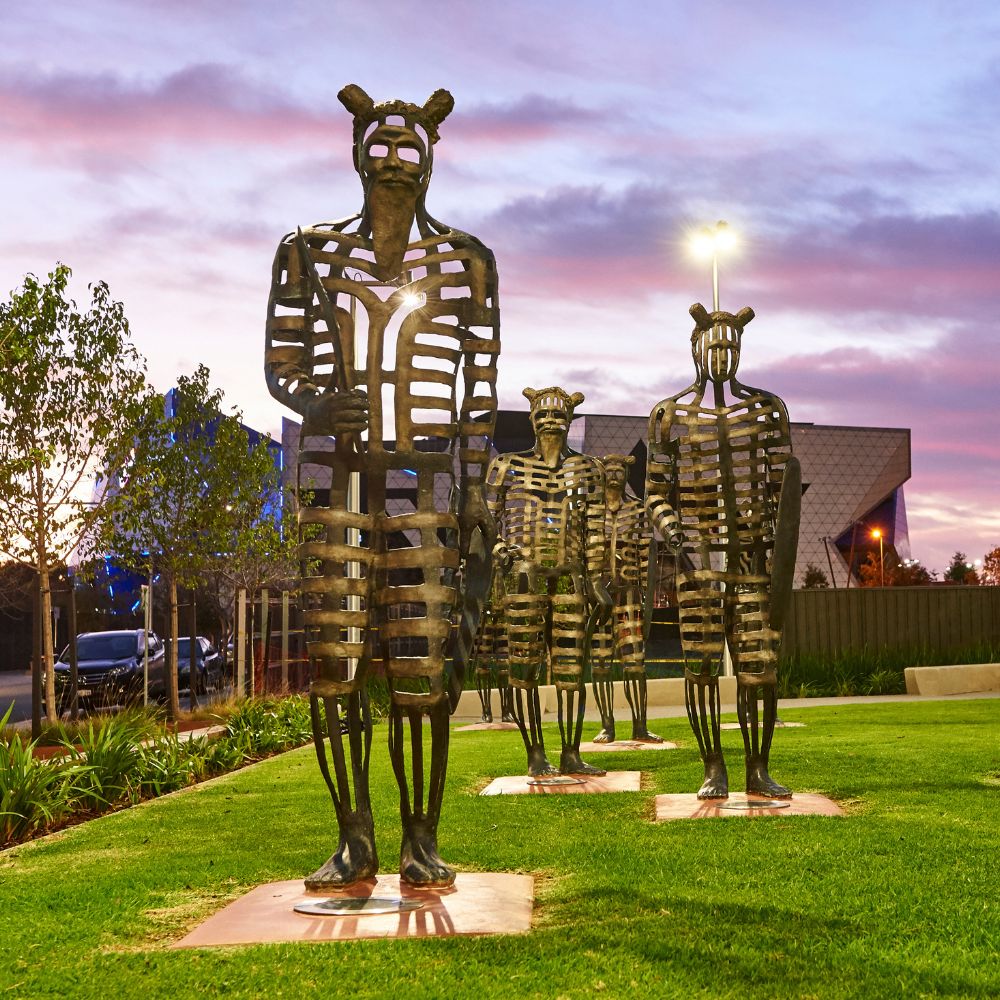 |
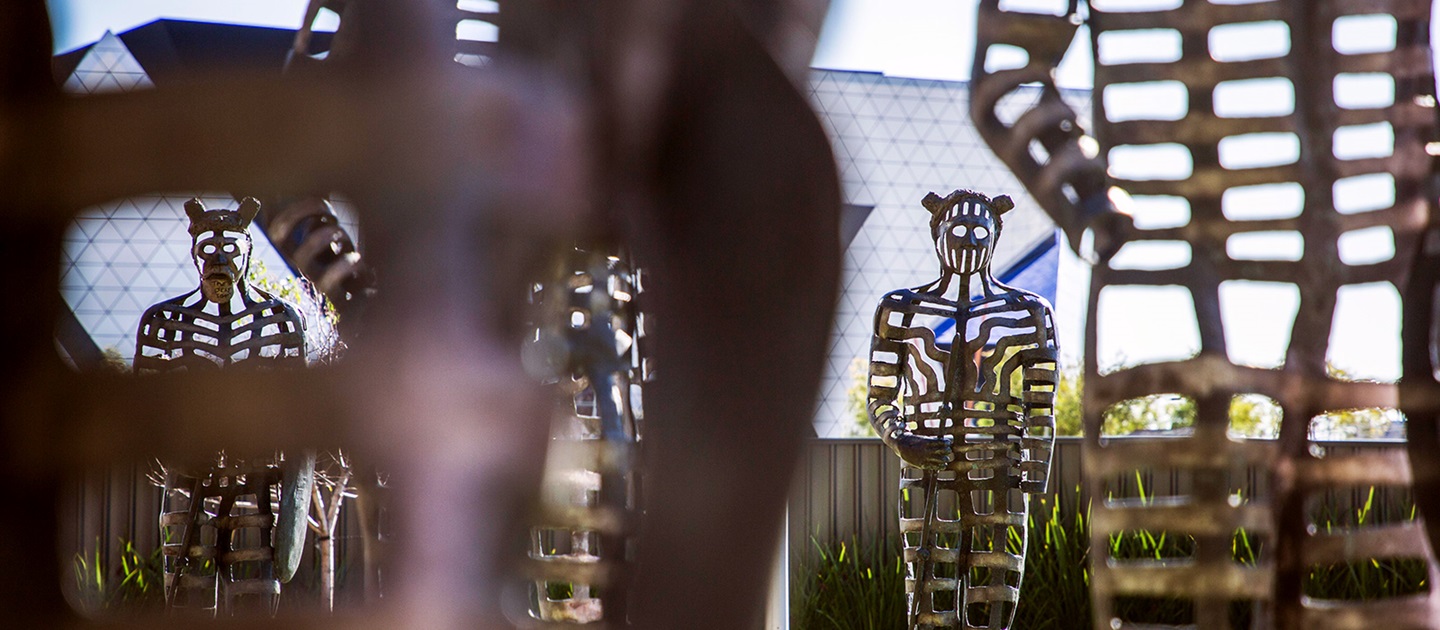
Koorden: Rod Garlett, Richie Kuhaupt and Fred Chaney (2015); City of Perth Cultural Collections. Image courtesy of Frances Andrijich Photography for Perth Public Art Foundation. | Composed of six dramatic figures rendered in cast bronze, these powerful skeletal male figures face east, striding across the grass of Wellington Gardens. The designs originally stem from painted ceremonial markings found in historical photographs and have been reinterpreted by Rod Garlett in extensive consultation with elders in the local Aboriginal community. | Southern edge of Wellington Gardens, Kings Square | -31.949252, 115.854999 | ||||
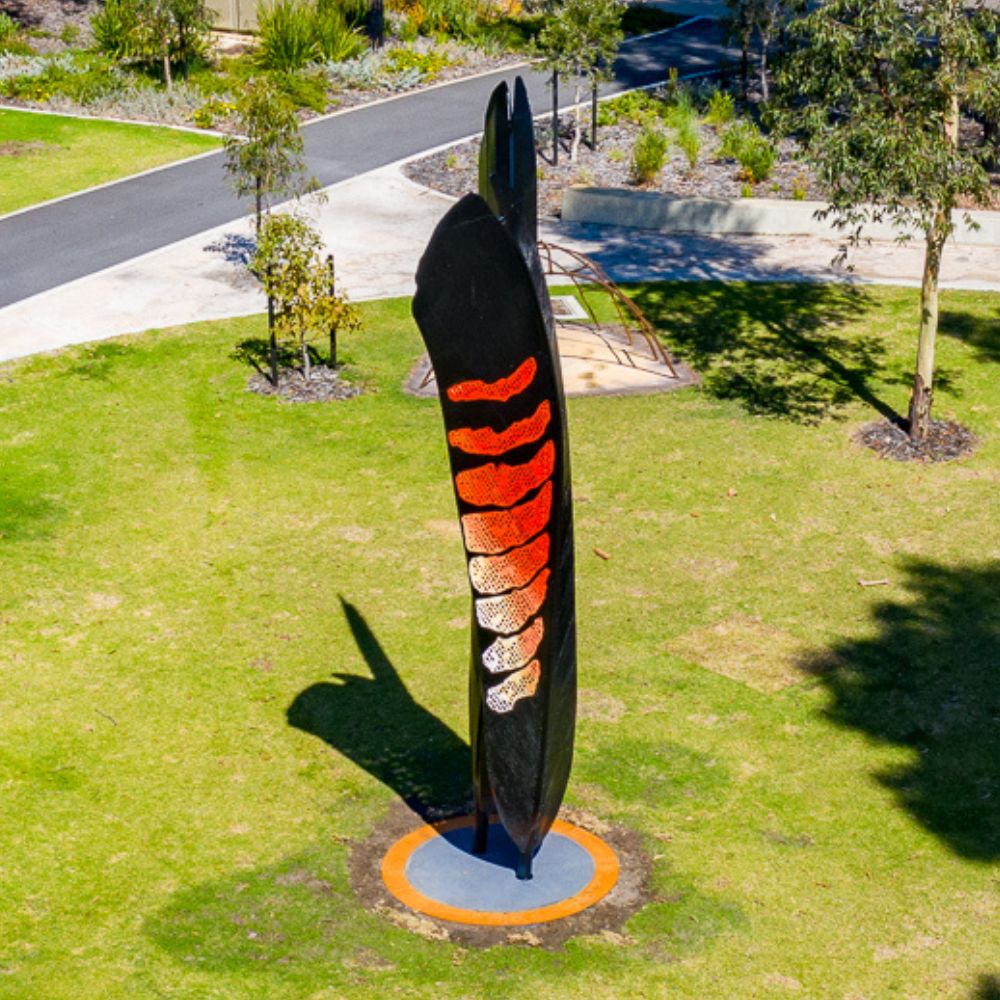 |
Mia Mias: Sandra Hill (2021) City of Perth Cultural Collections. Image courtesy of Scott Simpson City of Perth. | Created by artist Sandra Hill - Elder and Custodian of the Wadandi (salt water) people – Mia Mias is a dedicated place of healing in the north-west corner of the square.The artwork features a central beacon incorporating the male and female feathers of the red-tailed black cockatoo (Kaarak), surrounded by five traditional dwellings (mia mias). To finalise the work, the footprints of Sandra’s grandchildren were cemented into the concrete. | Northwest corner Moort-ak Waadiny / Wellington Square | -31.953405, 115.870963 |